


Are retro sweets the secret to a perfect party?

Last Updated: November 10, 2026
Quick Summary
Choose retro sweets by balancing fruity, fizzy, boiled, chocolate and sherbet items, then portion roughly 100g per adult and 75-100g per child at the table. Label every jar with allergens, keep nut items separate with their own scoop, and order to your headcount rather than buying oversized bulk packs.
Use 100-150g of loose sweets per adult and 75-100g per child at the table.
Fill party bags with 50-75g plus wrapped items per child.
Split your mix evenly across fruity, fizzy, boiled, chocolate and sherbet groups.
Give nut-containing jars their own labelled jar and separate coloured scoop.
Compare value by dividing pack price by the number of sweets, not the pack front.
Planning a party sweet table?
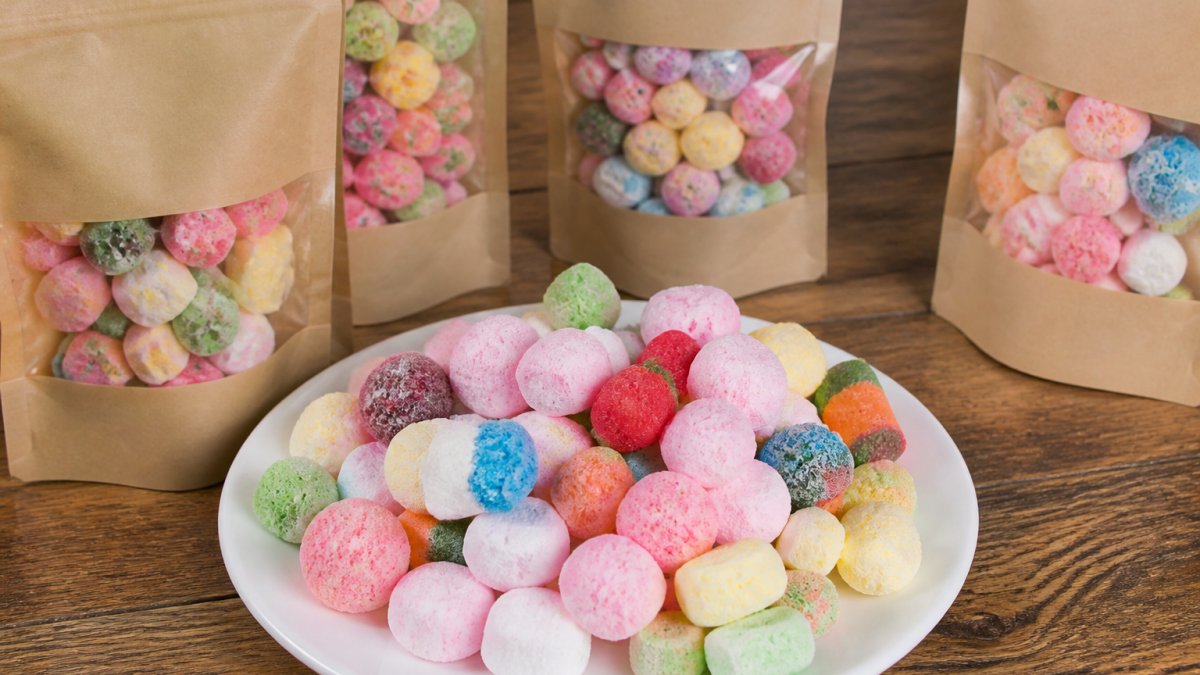
Build a custom retro pick and mix for any party size, with freeze-dried sweets made in-house.
Table of Contents
Why Retro Sweets Still Win at Parties
Retro sweets work at parties because they carry instant recognition and a story. A bowl of Sherbet Lemons or a jar of Kola Cubes does something a generic bag of mixed candy cannot: it starts conversations. Adults often gravitate to the sweets they remember from childhood, while children tend to be drawn to bright colours and unusual shapes.
This guide covers the practical side of choosing retro sweets for parties, from working out how many sweets per person for a party to portioning party bags and handling allergies. Below, we'll show you exactly how to plan a sweet selection that looks good, caters for everyone and stays within budget.
The nostalgia angle is real. Many hosts find that a retro sweet selection gets more attention than a modern candy bar, because guests recognise the brands and want to talk about them. That emotional pull is the secret. It turns a table of snacks into a talking point.
How Many Sweets Per Person for a Party?
Portion sizes depend on your guest list and what else you are serving, so use the guidance below as a starting point.
The amount shifts depending on what else you are serving. If sweets are the only treat, lean towards the higher end. If there is a cake, a dessert course or a buffet, a smaller amount per person is often enough.
A common mistake is over-ordering because bulk packs look like better value. Buying a bigger quantity is not always better if half of it goes uneaten. Compare value by dividing the pack price by the number of sweets, not by looking at the pack front alone. Buy to your headcount first, then top up only if you know your crowd has a sweet tooth.
Guest Type | Loose Sweets for Table | Party Bag Portion |
Adult | 100-150g | Not applicable |
Child | 75-100g | 50-75g plus wrapped items |
Mixed crowd | 100g average | 50-75g per child |
Mixing Flavours, Shapes and Textures in Your Sweet Selection
A good sweet selection balances four things: flavour, texture, shape and colour. Get those right and the table looks generous before anyone has picked up a scoop.
Here is how we would build a mix:
Fruity sweets for brightness and broad appeal: Fruit Salads, Sherbet Lemons, fruity chews.
Fizzy sweets for contrast: fizzy belts, sour cubes, anything with a sharp coating.
Boiled sweets for longevity and a classic look: Kola Cubes, traditional boiled favourites.
Chocolate sweets for richness: chocolate coins, chocolate-covered items, Jazzies.
Sherbet and novelty items for fun: Dip Dabs, Flying Saucers, candy sticks.
Aim for a roughly even split across those groups. Vary the sizes too, so there are small pieces for grazing and larger items for impact. Texture matters more than most hosts expect. A mix of chewy, crunchy, fizzy and creamy keeps people coming back, while an all-chewy selection feels monotonous after the first handful.
Retro Sweet Table Ideas That Look as Good as They Taste
The best sweet tables use height, colour and clear labelling. Glass jars and shallow bowls do most of the work, and a simple white or kraft tablecloth lets the sweets supply the colour.

Arrange jars at different heights using cake stands or stacked boxes underneath the cloth. Group sweets by colour rather than type, so each cluster reads as a block of colour from across the room. Keep scoops with each jar and a stack of paper bags at one end so guests can serve themselves without a bottleneck.
Match the selection to your event theme or colour scheme. A pastel palette suits christenings and children's parties, while bold reds and golds work for celebrations and milestone birthdays. For weddings, a sweet table with classic British sweets and simple signage fits almost any styling.
Label each jar with the sweet name, and add a small note for anything containing common allergens. That single step saves you a stream of questions on the day.
Pick and Mix Sweets for Parties: Customise Without the Chaos
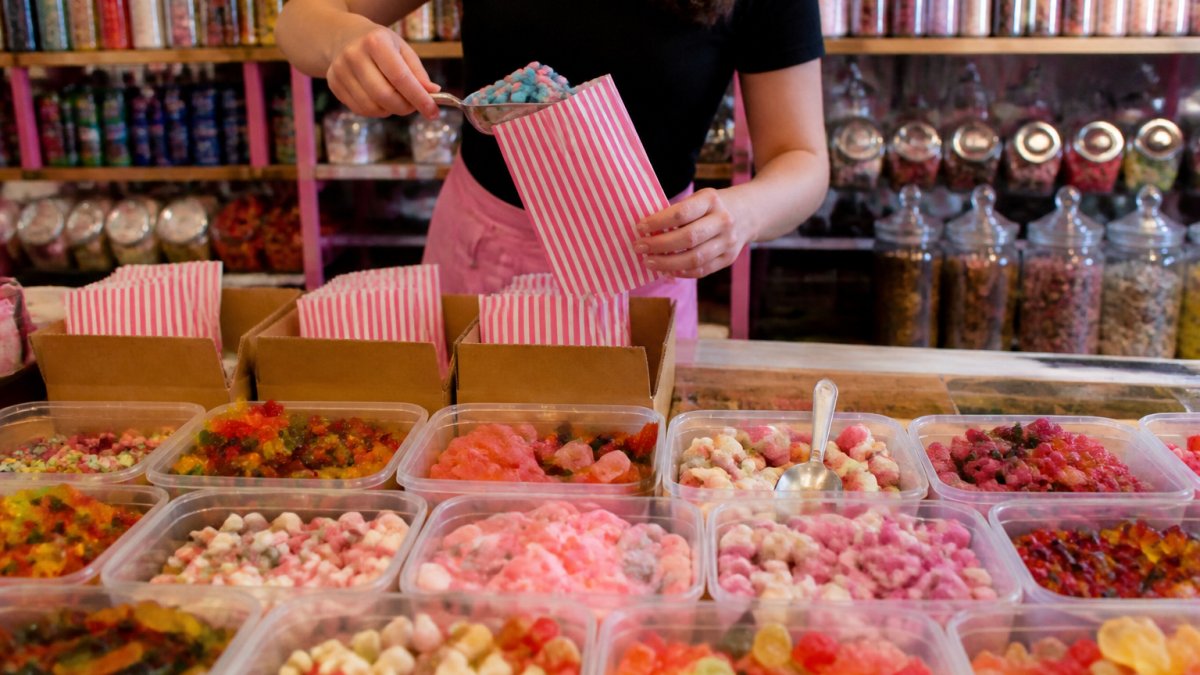
Pick and mix sweets for parties give you full control over the mix, but they need a plan. Without one, you can end up with too many of one type and nothing for other tastes.
Decide your categories before you order, then set a rough quantity for each. If you are buying loose sweets, work out your total weight first and divide it across your categories. For a party of 30 adults at 100g each, that is around 3kg of sweets in total, split across four or five categories.
Watch out: loose sweets need to be kept covered until serving. Sweets left open on a table for hours pick up moisture and lose their crunch, especially boiled and fizzy types. Set out smaller bowls and refill them from sealed containers as the party goes on.
If you want the fun of pick and mix without the measuring, a custom selection ordered in one go removes the guesswork. Custom mixes can be ordered so you can choose the sweets and quantities rather than accepting a pre-made bundle.
Retro Sweets Party Bags: Portioning, Packaging and Presentation
Retro sweets party bags work best when each bag holds a small, varied selection rather than one large item. A handful of different sweets feels more generous than a single big bag of the same thing.
Portion each bag with a mix of textures: one or two chewy sweets, a fizzy item, a boiled sweet and a wrapped chocolate. Individually wrapped sweets can be easier to portion, and they tend to suit party bags better than loose sweets that can crush against each other. Add a candy stick or a sherbet dip for a bit of theatre.
Paper bags, small boxes or clear cellophane bags all work. Paper is the simplest and the most forgiving if children are opening them in a hurry. Tie each bag with a ribbon in your party colours and add a name tag if the bags are personalised.
For younger children, keep pieces small and manageable. Avoid hard boiled sweets and anything with a stick for very young guests, and check the age guidance on any toy or novelty item before adding it.
Allergies, Age Suitability and Safe Choices
Allergies and age suitability are the two areas where a little planning prevents real problems. Treat this as a checklist you work through before you buy, not something you sort out on the day.
Build an allergen list before you order. For every product in your selection, note the name and the allergens declared on the label.
Separate the high-risk items physically, not just verbally. Nuts and peanuts are the usual culprits in retro mixes, often in chocolate items and cereal-based sweets. Give them their own labelled jar at the end of the table, with their own scoop.
Set aside a portion for anyone with a serious allergy. If a guest has a diagnosed allergy, prepare their bag or bowl first, from sealed packs, before the table is laid out. That removes any question of cross-contact from shared scoops or stray pieces.
Check for dietary suitability, not just allergens. Vegetarians and vegans need to avoid gelatine, which appears in many chewy sweets, marshmallows and some gums. Look for the vegetarian or vegan statement on the pack rather than assuming a fruity sweet is suitable.
Match the format to the age group. For under-fives, choose soft sweets, chocolate buttons and larger pieces, and avoid hard boiled sweets, small round items and anything on a stick. Supervise eating and keep sweets seated, not walking about.
Label the table, not just the bags. A small card by each jar with the sweet name and a short allergen note saves a stream of questions and lets guests make their own decision.
Ordering Your Retro Sweet Selection from Sweet Junkies
Ordering comes down to four numbers: headcount, portion size, budget and delivery date. Work them out in that order and the rest is straightforward.
Set a per-person budget first. Decide what you are willing to spend per guest on sweets, then divide your total budget by that figure to see how many guests it realistically covers.
Compare bulk and individually wrapped options honestly. Bulk loose sweets usually cost less per gram, but they need scoops, bags and a bit of labour on the day.
Buy to your headcount, then top up. Order the weight your numbers call for, and only add extra if you know your crowd has a sweet tooth.
Order early and store it properly. Sweets generally keep best sealed, cool and away from strong smells. Keep chocolate out of warm rooms, and keep boiled and fizzy sweets sealed until the day.
Set out in stages. Put out smaller bowls and refill from sealed containers as the party goes on, rather than filling every jar at the start. This keeps textures at their best and makes the table look fresh later in the event.
We run a traditional pick and mix shop with retro and modern sweets, and we make our own freeze-dried sweets. You can browse the retro sweet range and order the quantities you need.
Planning a party sweet selection is easier when you can build the mix yourself. At Sweet junkies, we offer a traditional pick and mix with retro and modern sweets, freeze-dried sweets made in-house, and American drinks and international crisps to round out the table.
Frequently Asked Questions
What retro sweets are best for a party?
The best retro sweets for a party are the ones that suit your guests' ages and your theme. Classics like Kola Cubes, Sherbet Lemons, Fruit Salads and Black Jacks appeal to adults, while Jazzies, chocolate coins and Flying Saucers go down well with children. Mix chewy, fizzy, boiled and chocolate sweets so there is something for everyone, and include a few individually wrapped options for easy serving.
How many sweets should I buy per guest?
Aim for roughly 100g to 150g of loose sweets per guest if sweets are the main treat, or 50g to 75g per person if they are part of a wider buffet. For party bags, around 50g per bag works well. These are starting points, so adjust for the age of your guests and how long the event runs. Ordering slightly more than you think you need avoids running out early.
How do I choose sweets for guests of different ages?
Offer a spread that covers the full age range. Boiled sweets and hard candy suit older children and adults, while softer options like Jazzies, chocolate coins and small wrapped sweets are easier for younger children. Keep very hard or small round sweets away from toddlers, and label bowls clearly so parents can guide their children. A pick and mix setup lets guests choose what suits them.
How can I cater for guests with allergies or dietary requirements?
Check ingredient labels on every sweet you buy and keep the packaging or a printed list nearby so guests can check. Common allergens in retro sweets include milk, soya, wheat and nuts. Set up separate bowls and scoops for anything containing nuts, and offer a clearly labelled dairy-free or gluten-free section. If you are unsure about a product, contact the shop before ordering.
How should I store sweets before a party?
Keep sweets in their original sealed packaging until the day before the event, stored somewhere cool and dry away from direct sunlight. Loose pick and mix should be decanted into airtight containers. Avoid storing chocolate sweets near heat, and keep boiled sweets away from damp. If you are filling party bags in advance, seal them well and store them in a cool cupboard so everything stays fresh.
Comments