


How Do You Spot High-Quality Sweets?

Last Updated: November 14, 2026
Quick Summary
You spot high-quality sweets by starting with the ingredient label: look for recognisable ingredients, accurate allergen information and a clear best-before date. Then check freshness and trust your senses, since fresh sweets look bright, smell clean and snap rather than bend. Judge each category by its own quality markers.
Ingredients are listed in descending order of quantity, so the first names show what you are really buying.
Under NHS guidance, the 14 major allergens must be declared and emphasised in the ingredients list.
Break chocolate near your ear: a clean crack means good tempering and proper storage.
Store sweets cool, dry, dark and sealed, and eat most within a few weeks of opening.
Compare price per weight and check delivery charges before ordering sweets online.
Want sweets that actually taste fresh?
Sweet junkies offers a huge pick and mix range, own-made freeze-dried sweets and free delivery options.
Table of Contents
Start With the Ingredient Label on High-Quality Sweets
High-quality sweets are made with recognisable ingredients, accurate allergen information and a clear best-before date. Everything else, the shine, the smell, the snap, follows from what went into the bag.
Two bags of strawberry laces can look identical and taste nothing alike: one uses real fruit juice and natural colour, the other synthetic dyes and a flavour compound. Only the label records that difference.
So start there. Flip the bag and ask three questions: is it short, is it honest, and does it tell you what you need to know about allergens?
What a Good Ingredients List Looks Like
A good ingredients list is short, ordered by weight, and free of vague catch-alls. Ingredients appear in descending order of quantity, so the first few names tell you what you are really buying.
Watch for these signals:
Sugar or glucose syrup listed first means the sweet is mostly sugar, which is normal for confectionery, but check what follows
Named fats such as cocoa butter or whole milk powder beat unnamed "vegetable fat"
Real flavour sources like fruit juice concentrate, cocoa mass or vanilla extract beat "flavouring"
A short list is not automatically better. A long list is not automatically worse. What matters is whether you can picture each ingredient.
Allergens, Additives and What to Check Before You Buy
Allergen information is not optional in the UK. Under NHS guidance on food allergies, the 14 major allergens must be declared and emphasised in the ingredients list, usually in bold or capitals. Check for milk, soya, wheat, nuts, peanuts, egg and sesame first, since these appear most often in sweets.
Then look at additives. Most are safe and legal, but a few are worth knowing about:
Sulphites can trigger reactions in sensitive people and often appear in dried fruit pieces
Glazing agents like shellac or beeswax are harmless but not vegan
How to Tell If Sweets Are Fresh Before You Buy
Fresh sweets look bright, smell clean and feel right in the hand.
Check the best-before date first. It should be printed clearly, not smudged or missing.
Then look at the sweet itself. Fresh boiled sweets have a clean shine.
Finally, smell it. A fresh fruit sweet smells of fruit.
Watch out: chocolate that has gone pale and streaky has bloomed from heat or age.
The Sensory Check: Appearance, Aroma and Texture
The sensory check is a quick three-part test: look, smell, then feel or taste. Each sense catches a different fault, giving you a reliable read on quality in under a minute.

Sight, Smell and Snap: A Quick Checklist
Use this checklist every time you open a new bag:
Appearance: even colour, clean surface, no cracks, chips or white bloom
Shape: consistent size and form, which shows careful manufacture
Aroma: natural fragrance matching the flavour, not a chemical sharpness
The snap test is the one most people skip. Break a piece of chocolate near your ear: a clean crack means good tempering and proper storage, a dull thud means it softened and re-set.
The same logic applies beyond chocolate. A good toffee chews without welding your teeth together, a good boiled sweet dissolves slowly instead of shattering, and a good freeze-dried sweet is light, crisp and full of flavour.
How to Choose Pick and Mix Sweets That Suit You
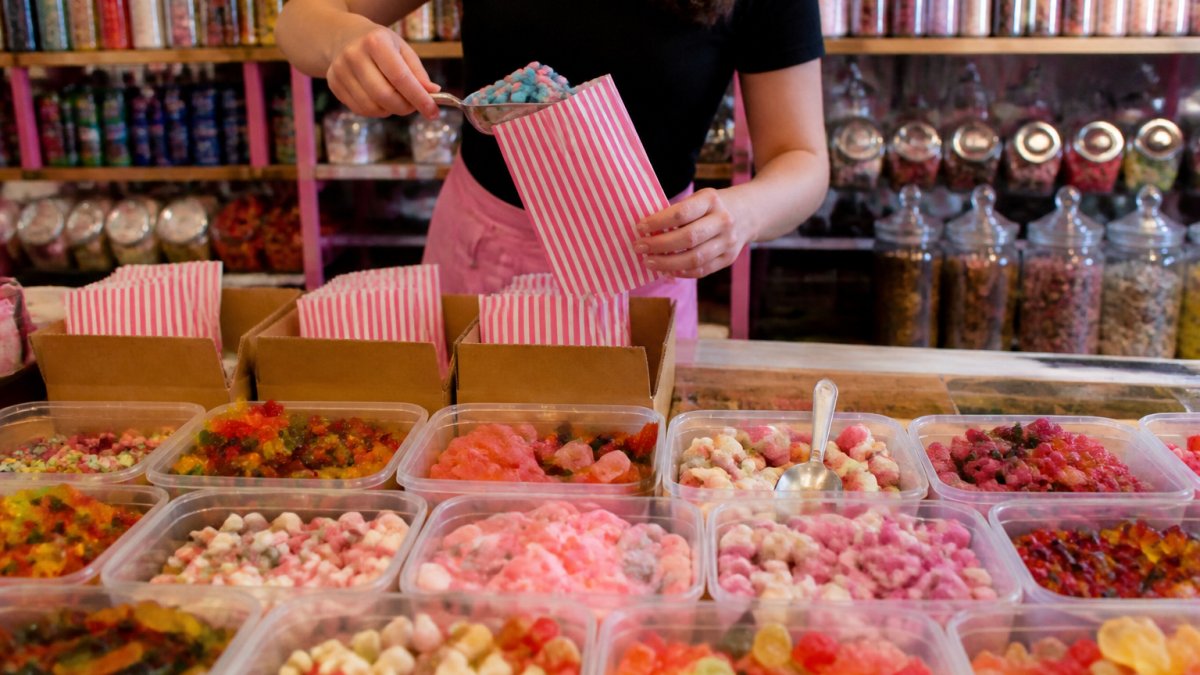
Choosing pick and mix well is a quality decision before it is a flavour decision. Most shoppers choose by colour and novelty; a better approach is to assess the sweets category by category, using the same signals a confectioner would use, whether you fill a bag from jars or order a custom box online.
Assess the Display Before You Assess the Sweet
Start with the conditions around the sweets, because they predict freshness better than any single sweet can.
Check the packaging and jars. Lids should be closed, scoops should rest in a clean holder rather than inside the sweets, and jars should not be sticky at the rim.
Check the date and rotation. Ask when the stock was last replenished; a shop that rotates stock will usually have a date code or delivery record to show you.
Check the storage environment. Sweets should be away from direct sunlight and heat sources, since chocolate near a radiator or in a sunny window will bloom regardless of its best-before date.
Use a Category-Specific Quality Test
The mistake most shoppers make is applying chocolate rules to everything. A boiled sweet will never snap like tempered chocolate, and a fudge will never be glossy. Judge each category by its own markers.
Boiled sweets: look for clear, glossy sweets with even colour. Cloudiness, stickiness or sweets clumped together point to moisture ingress. A good boiled sweet dissolves slowly and evenly rather than shattering.
Gummies and jelly sweets: they should be springy, not tacky, and should hold their shape without sweating. A sticky surface or sweets fused into a block means they have absorbed moisture or been stored warm.
Fudge: the surface should be smooth and matte, not wet or grainy. Graininess comes from sugar crystals forming during the cook, and it cannot be fixed by storage.
Build a Balanced Bag Without Overloading It
Balance is a quality issue as well as a taste issue. A bag of nothing but sour sweets overwhelms the palate within minutes, and a bag of only chocolate melts into one note. Build a mix from two or three flavour families with contrasting textures: something chewy, something crunchy and something sharp.
Quality Differences Across Sweet Categories
Quality looks different in every sweet category, and judging one by another's rules leads to bad buys. Use the reference below when choosing between products.
Chocolate
Cocoa content is one of the main quality markers, and it is worth matching the percentage to your taste. Check that the label names cocoa butter rather than unnamed vegetable fat, and look for a clean shine and even colour.
Boiled Sweets
Boiled sweets should be clear and glossy with an even colour. A good one dissolves slowly and evenly rather than shattering. The common defect is stickiness or clumping, which points to moisture getting in; once that happens, the sweet softens and loses its clean finish.
Gummies and Jelly Sweets
Gummies should be springy, hold their shape and feel dry to the touch. The common defect is a tacky surface or sweets fused into a block, both signs of moisture absorption or warm storage. Colour should be even, not patchy.
Fudge
Fudge should be smooth and matte, not wet or grainy. Graininess comes from sugar crystals forming during the cook and cannot be corrected by storage. A good fudge holds its shape when cut and does not weep moisture.
Marshmallows
Marshmallows should spring back when pressed and feel dry on the surface. The common defect is a tacky surface or a collapsed shape, which means they have absorbed moisture.
Freeze-Dried Sweets
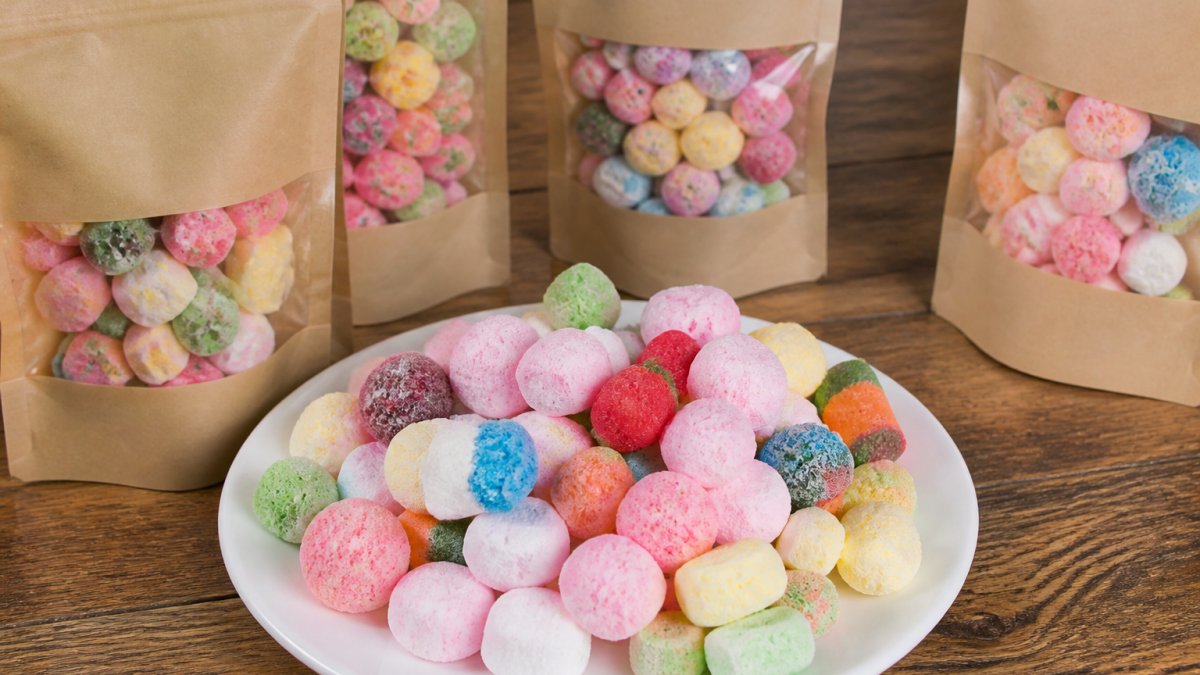
Freeze-dried sweets should be crisp all the way through with concentrated flavour. The common defect is soft spots, which mean the process was rushed or the storage failed. Once moisture gets in, they soften within hours.
Caramel, Toffee and Nut Fillings
Fillings are where quality often separates. A good caramel is smooth and does not taste of burnt sugar; a good toffee chews without welding your teeth together; nuts should taste fresh, not rancid. The common defect is a filling that has wept into the coating or turned gritty, usually from age or poor temperature control.
Each sweet category has its own quality markers and common defects, so judge them by their own rules.
Category | Quality markers | Common defect |
Chocolate | Clean shine, even colour, cocoa butter named on label | Pale, streaky bloom from heat or age |
Boiled sweets | Clear, glossy, even colour; dissolves slowly and evenly | Stickiness or clumping from moisture |
Gummies and jelly sweets | Springy, hold shape, dry to the touch | Tacky surface or sweets fused into a block |
Fudge | Smooth and matte, holds shape when cut | Graininess from sugar crystals during the cook |
Marshmallows | Spring back when pressed, dry surface | Tacky surface or collapsed shape |
Freeze-dried sweets | Crisp all the way through, concentrated flavour | Soft spots from rushed process or failed storage |
Caramel, toffee and nut fillings | Smooth caramel, toffee chews without welding teeth, fresh nuts | Filling wept into coating or turned gritty |
How to Store Sweets So They Stay at Their Best
Storing sweets well means keeping them cool, dry and away from strong smells.
Follow these storage rules:
Keep it cool: a cupboard away from the oven and radiator, not the top of the fridge
Keep it dry: an airtight container beats an open bag every time
Keep it dark: light fades colour and degrades chocolate
Chocolate is the fussiest. It prefers a steady cool temperature and dislikes fridge condensation, which brings on sugar bloom.
Freeze-dried sweets stay crisp longest in an airtight jar. Once moisture gets in, they soften within hours.
Most sweets are best eaten within a few weeks of opening.
Building Your Own Quality Sweet Selection at Sweet junkies
Building a quality selection starts with knowing what you like, then choosing a shop that lets you act on it.
We built Sweet junkies around exactly those three checks. Our shop carries one of the largest varieties of traditional, retro and modern sweets, all chosen as the best options from every supplier we work with rather than a single source. We make our own freeze-dried sweets in-house, so we know exactly what goes into them. And we keep prices reasonable compared with the wider market, because everyone should be able to enjoy good sweets.
A few practical tips before you order:
Compare price per weight, not just the headline price
Check delivery charges and spend enough to qualify for free delivery where it applies
Buy larger boxes or mixes for better variety and value
If you want to see what a properly curated range looks like, browse the Sweet junkies selection and build a box around the flavours you actually enjoy.
Quality sweets are not about paying the most or chasing the trendiest brand.
At Sweet junkies, we stock traditional, retro and modern pick and mix, make our own freeze-dried sweets, and carry American drinks and international crisps alongside.
Frequently Asked Questions
How can you tell if sweets are good quality?
Start with the ingredient label: short lists with recognisable ingredients, real cocoa solids in chocolate and natural flavourings are good signs. Then check appearance, aroma and texture. High-quality sweets look evenly coloured with a clean finish, smell of their actual flavour rather than chemicals, and have the texture the type promises, whether that is a crisp snap on chocolate or a soft chew in a jelly. Freshness matters too, so check the best-before date and how the sweets are stored.
What ingredients should you look for in quality sweets ingredients?
Look for real cocoa butter and cocoa solids in chocolate rather than vegetable fat substitutes, natural flavourings and colourings where possible, and recognisable fruit, nut or dairy ingredients. Shorter lists generally mean fewer fillers and additives. Check the allergen information clearly, especially for nuts, milk, soya and gluten. At Sweet Junkies we select sweets from all available suppliers rather than a single source, so the ingredients list varies by product.
Does a higher price mean sweets are better quality?
Not automatically. Price often reflects packaging, branding or import costs rather than ingredient quality. Compare the ingredient list, freshness and texture instead of assuming the most expensive option is best. A well-made sweet at a fair price can outperform a costly one with a long additive list. At Sweet Junkies we keep prices reasonable compared with the surrounding market so everyone can enjoy quality sweets without overpaying.
How should you store sweets to keep them fresh?
Keep sweets in an airtight container away from direct sunlight and heat, ideally somewhere cool and dry. Keep sweets away from strong smells, and check the best-before date.
Comments