


How to Keep Sweets Fresh During Shipping

Last Updated: November 6, 2026
Quick Summary
To keep sweets fresh during shipping, pack them in a sealed foil bag inside a sturdy outer box with cushioning filling every gap so the contents cannot shift. Store sweets cool and dry before packing, and add a wrapped food-safe gel pack for chocolate or cream-based orders.
Sweets lose freshness in transit through moisture, heat and movement.
Foil-sealable bags block moisture and air; zip-lock bags suit small orders.
Fill empty space so the sealed bag cannot rattle on sorting belts.
Keep chocolate below room temperature and away from heat sources.
Send a trial shipment in each season to test your packing method.
Table of Contents
Why Sweets Lose Their Edge in Transit
Sweets lose their edge in transit because of moisture, heat and movement.
Here at Sweet junkies, we pack our online postal deliveries in foil-sealable bags.
Most sweets are perishable.
Movement is the third enemy. Parcels are sorted at speed in transit, and a box that shifts inside its outer packaging takes the impact instead of absorbing it.
Below, we break down each of those four jobs, plus a packing workflow you can follow at the kitchen table.
Choosing the Best Packaging for Posting Sweets
The best packaging for posting sweets is a sturdy outer box, a sealed inner bag and a layer of cushioning between the two.
Start with the inner layer. Foil-sealable bags block moisture and air, and a zip-lock bag is a sensible option for small orders.
Then the outer layer.
Between the two, add cushioning:
Bubble wrap around the sealed bag
Crumpled paper to fill empty space
A plastic tray for anything soft or cream-based
Empty space is the quiet culprit. If the bag can rattle, it will move on every sorting belt.
One more thing worth knowing: sweets pick up smells.
How to Stop Sweets Getting Crushed in the Post
Crushing is the most common complaint about posted sweets, and it is almost always a cushioning failure rather than a rough handler.
Here is how to stop sweets getting crushed in the post:
Wrap individually. Hard or brittle sweets, such as brittle, honeycomb and decorated chocolates, travel best when each one is wrapped in its own piece of paper or film.
Group soft with soft. Do not put a heavy bag of boiled sweets on top of delicate freeze-dried pieces.
Use a plastic tray. A shallow tray keeps chocolates and cream-based sweets from pressing on each other.
Fill the corners. Corners take the first hit, so pack them tightly with paper or bubble wrap.
Choose the right box size. A box that is too big lets contents slide; one that is too small bulges and splits.
Overfilling is a common mistake: a box packed to bursting has no give, so the force of a drop goes straight into the sweets. Leave a little cushioning room.
For anything fragile, double-box it: seal the sweets in their foil bag, cushion it inside a small box, then place that box inside a larger padded one.
How to Store Sweets Before They Go in the Post
How you store sweets before they go in the post matters as much as the packing itself when you want to keep sweets fresh.
Store stock in a cool, dark, dry place, a cupboard away from the oven, radiator and window.
Keep everything sealed until the moment you pack it.
A few storage habits that pay off:
Keep chocolate below room temperature and away from heat sources
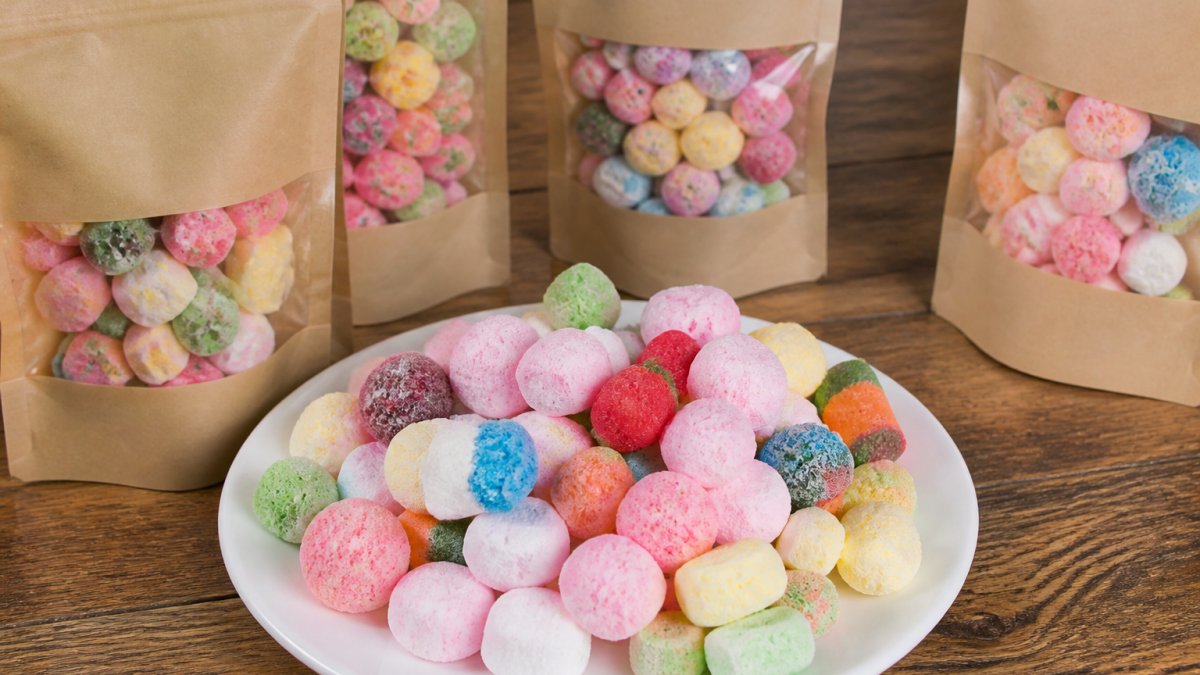
Store freeze-dried candy in an airtight container, never in an open bowl
Use a dry cabinet or a high, dry shelf for longer storage
Rotate stock so older bags go out first
Label each bag with the date it was packed
Watch out: a fridge seems sensible for chocolate, but condensation forms when sweets return to room temperature, exactly the moisture you are trying to keep out.
How Long Do Sweets Last in Sealed Bags?
Most sweets keep for weeks or months in a sealed bag, depending on the type. The table below gives a rough guide to how long sweets last in sealed bags, stored cool and dry:
Sweet type | Typical sealed shelf life | Main risk |
Boiled and hard sweets | Several months | Sticking in humidity |
Chocolate | Several months | Heat bloom and melting |
Fudge and cream-based sweets | Weeks, not months | Spoiling and softening |
Biscuits and baked goods | Weeks | Staleness and breakage |
Freeze-dried candy | Several months if kept dry | Going chewy in damp air |
Marshmallow | Weeks | Drying out or going sticky |
These are general guides, not guarantees. Always check the product label for the maker's own date and treat that as the ceiling.
Set realistic arrival expectations
Freshness on arrival is not the same as shelf life in a cupboard: a sweet perfectly fresh when packed can still arrive soft, sticky or broken. Tell recipients when the sweets were packed, how to store them, and which items to eat first, for cream-based and fudge items, a 'best within a few days of arrival' note is more useful than a distant date.
Test your packaging with a trial shipment
Before you commit to a packing method for a regular route, send a test parcel to yourself or a willing recipient. Include one of each sweet type you plan to post, packed exactly as you would for a customer. When it arrives:
Check the seal. Is the foil bag still airtight, or has it been punctured or loosened?
Feel for moisture. Condensation inside the bag, or a clammy texture on the sweets, means moisture got in.
Look at chocolate. A dull greyish surface indicates heat bloom; melted and re-set shapes indicate worse.
Test the crunch. Freeze-dried pieces should still snap, not bend.
Weigh the damage. Count broken pieces and compare against what you packed.
A trial shipment in each season tells you more than any table. If a route fails in July, add insulation or a faster service for summer; if it fails in winter, check whether condensation from cold-to-warm transitions is the culprit.
Freeze-dried sweets deserve a note. A bag that is not properly sealed lets them soften within days, so an airtight bag and a small silica gel sachet make a real difference on longer routes.
Keeping Chocolate and Temperature-Sensitive Sweets Cool
Chocolate and cream-based sweets need temperature control, and this is where a little planning pays off. Warmth is the enemy: chocolate softens, then re-sets with a pale bloom. The fix is not simply 'add a cold pack', it is matching the cooling method to the sweet, the season and the route.
Choose the right cooling method
No cooling, fine for hard sweets, boiled sweets and biscuits on short routes in cool weather. Good sealing and cushioning are enough.
Food-safe gel packs, the default for chocolate, fudge and cream-based sweets on most routes. They are reusable, do not leak if intact, and are accepted by mainstream carriers.
Dry ice, only for long routes in hot weather or for highly heat-sensitive items. It is far colder than a gel pack, sublimates to carbon dioxide gas, and carries real handling and carrier restrictions.
Using gel packs safely
Place a food-safe gel pack in the box, wrapped so it does not touch the sweets directly, and add an insulating blanket or bubble wrap around it to slow the warming.
Use food-safe gel packs, never loose ice or frozen water bottles that can leak.
Wrap the pack so meltwater cannot reach the sweets, a sealed bag around the pack is cheap insurance.
Keep the pack against the side of the box, not on top of the chocolate, so cold air circulates rather than pressing on the product.
Do not over-cool: a gel pack that is too cold can cause condensation when the parcel is opened in a warm room, the very moisture you are trying to avoid.
Tell the recipient to open the box promptly on arrival and to remove the cold pack.
Dry ice: what you must know before posting
In a sealed box, that gas builds pressure. Practical rules:
Check the carrier's rules first. Many carriers do not accept dry ice in ordinary parcels, and those that do usually require it to be declared, labelled and vented. Royal Mail's guidance on sending food and perishable items is the place to start, and you should confirm the current position with your chosen carrier before packing.
Vent the box. Use a box with a small vent or do not fully seal the inner bag around the dry ice, so gas can escape.
Label clearly. Mark the parcel as containing dry ice and state the net quantity, following the carrier's labelling requirements.
Protect hands and surfaces. Use insulated gloves and tongs, and never place dry ice directly on a kitchen worktop.
Do not use dry ice for cream-filled or fresh items unless the carrier and the recipient can handle it, the extreme cold can freeze and damage textures as readily as heat can.
Route and season change the plan
A short trip in cool weather needs nothing beyond good sealing; a long trip in a heatwave needs a cold pack, insulation and the fastest delivery option you can justify.
Prompt delivery is the simplest temperature control there is: the less time in transit, the less exposure to heat, humidity and handling.
Packing Your Sweets for Delivery: A Step-by-Step Workflow
What you need:

Foil-sealable bags
Sturdy cardboard boxes in a few sizes
Bubble wrap and crumpled paper
Food-safe cold packs for chocolate orders
Packing tape and a marker pen
Step 2: Fill the foil bag. Fill it, then press out the air before sealing.
Step 4: Wrap fragile items. Individually wrap brittle or decorated sweets.
Step 7: Fill all gaps. Shake the box gently. If anything moves, add more paper.
Step 8: Seal and mark. Tape all seams and mark the box clearly.
Step 9: Choose the service. Match shipping speed to how temperature-sensitive the order is.
A packing checklist on the wall speeds this up more than any tool.
Ordering Sweets That Arrive in Perfect Condition
Ordering sweets that arrive in perfect condition comes down to choosing a seller who packs properly and a delivery option that suits the sweets.
Look for these signs before you order:
Sweets packed in sealed bags, not folded paper
Clear shelf life information on the product label
A choice of delivery speeds
A seller who makes their own products and can tell you how fresh they are
Sensible packaging that protects as well as seals
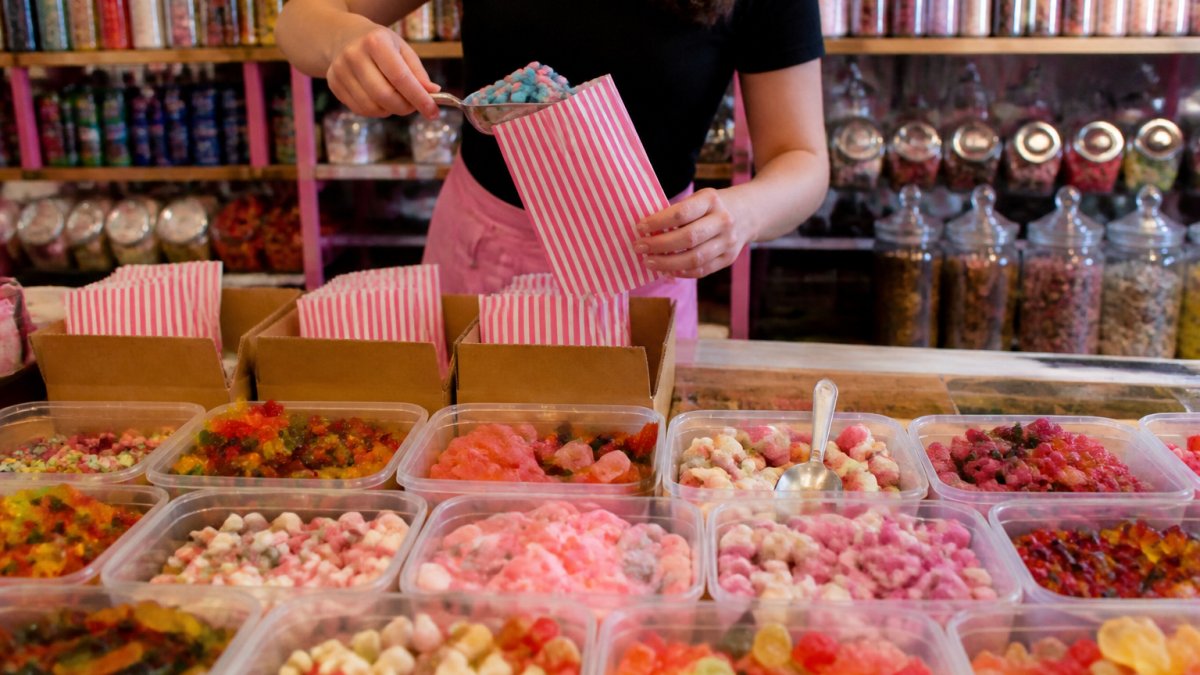
If you would rather skip the packing altogether, you can order pick and mix and freeze-dried sweets packed in foil-sealable bags and have them arrive ready to hand over.
A final word on arrival. Unpack promptly, especially in warm weather.
Frequently Asked Questions
How do you stop sweets going stale in the post?
The main enemy is air and moisture, so seal sweets in an airtight bag and squeeze out as much air as you can before closing it. Foil-sealable bags block moisture and air. Pack the sealed bag inside a sturdy box so it does not get punctured in transit. Post early in the week so your parcel is not sitting in a depot over the weekend.
Do sweets need airtight packaging during shipping?
Yes, airtight packaging makes a real difference. Sweets pick up moisture from the air, which makes hard sweets sticky, fudges grainy and chocolate bloom. An airtight bag or food storage container keeps the texture and flavour intact from dispatch to doorstep. If you are posting a mix of sweets, seal each type separately so strong flavours like mint or aniseed do not drift into milder treats.
How can you protect chocolate sweets from heat during delivery?
Chocolate softens above roughly 20°C, and a delivery van or sorting office can get much warmer than that. Chocolate softens in warm conditions, so choose prompt delivery where you can. If the forecast is very hot, it is worth waiting for cooler weather before ordering.
How do you stop sweets getting crushed during shipping?
Cushioning is the answer. Keep sweets cushioned so nothing shifts in the box, and avoid overfilling a bag, because a bulging bag can burst at the seams.
Getting sweets to arrive fresh is a job of small decisions: the right bag, the right cushioning, the right service for the weather. At Sweet junkies, every online postal delivery goes out in foil-sealable bags, and we make our own freeze-dried sweets in-house, so we know exactly how crisp they are when they leave us. We also stock American drinks and international crisps alongside our traditional pick and mix. Get started with Sweet junkies and send sweets that arrive as fresh as they left.

Comments