


Traditional Sweets From My Childhood: A Nostalgic Guide

Last Updated: October 22, 2026
Quick Summary
Traditional sweets are the confectionery of the 1950s to 1980s, sold loose from jars and bought by weight, sharing bold flavour, cheap price and a shop assistant with a metal scoop. The buying ritual mattered as much as the sweet: you pointed, counted out coins and watched the bag go on the scales.
Sherbet lemons were sucked until a hole formed so the fizzy powder could be poured out slowly.
Boiled sweets like pear drops and aniseed twists lasted a full afternoon in a blazer pocket.
Discontinued sweets usually vanish through recipe reformulation, brand consolidation, production relocation or retail delisting.
Match the decade to the person, since a 1970s school bag and a 1990s one have almost nothing in common.
Boiled sweets keep for 9 to 12 months, while chewy sweets and chocolate have a shorter shelf life.
Table of Contents
Why Traditional Sweets From My Childhood Still Matter
Traditional sweets from my childhood are the fast track back to a school corridor, a corner shop counter and a paper bag twisted at the corners. At Sweet junkies, the pattern repeats: someone buys a quarter of sherbet lemons for a parent, then returns later for their own bag.
Nostalgia is doing real work here: a flavour pulls up a memory faster than a photograph, and sweets are tied to pocket money, playground swaps and Saturday trips to the shop. The old-fashioned jars never left, they just moved online.
Below: the classics by type and decade, what's vanished, and how to buy the good stuff now.
Retro Sweets That Defined School Days and Pocket Money
Retro sweets are the confectionery of the 1950s to 1980s, sold loose from jars and bought by weight. They share bold flavour, cheap price, and a shop assistant with a metal scoop.
What most guides miss is that the buying ritual mattered as much as the sweet: you pointed, counted out coins, watched the bag go on the scales. That's why a retro sweet box lands so well as a gift, it isn't just sugar, it's the whole transaction.
Sherbet, Fizz and the Sour Hit
Sherbet is the powder that started it all. A sherbet lemon is a hard lemon shell filled with fizzy powder, and the trick was to suck a hole in the end and pour the sherbet out slowly. Get it wrong and you'd inhale it.
The same fizz logic runs through cola cubes, sherbet fountains and the sour sweets teenagers still chase.
Chewy Classics and Boiled Fruit Flavours
Boiled sweets reward patience. Pear drops, rhubarb and custard, pineapple chunks and aniseed twists take time to soften, which is why they lasted a full afternoon in a blazer pocket.
Chewy sweets work the other way: fruit jellies, jelly babies, wine gums and apple bonbons are gone in minutes, and they're the ones swapped, traded and argued over on the playground.
Pro Tip If you're building a gift bag, pair one long-lasting boiled sweet with two chewy ones. The boiled sweet keeps the bag interesting after the fast sweets are gone.
Discontinued Sweets We Still Miss
Discontinued sweets are the lines that vanished when recipes changed, brands merged or production moved. Every family has its own list, and no two match. What most nostalgia posts won't tell you is why a sweet disappears, and that reason usually tells you whether it's coming back.
There are four common mechanisms behind a disappearance:
Recipe reformulation. Colourings and additives were removed or swapped following Food Standards Agency guidance on food additives and colours, and the flavour shifted enough that loyal buyers noticed. The sweet still exists; it just doesn't taste the same.
Brand consolidation. A manufacturer buys a rival and drops the lower-volume lines; the recipe often survives under a different name.
Production relocation. When a factory closes or moves, small-run lines go first because they're uneconomic to restart.
The Ones Customers Ask For Most
These names come up again and again at the counter, and here's what actually happened to them:
Aniseed balls with the hard centre. The classic version had a solid core that took an age to dissolve; many modern versions are softer throughout. Look for sellers who specify a hard centre.
Pineapple chunks and pear drops in the old bold colours. Reformulation removed some of the brightest colourings, so they look paler than the ones in your memory. The flavour is close; the appearance isn't.
Sherbet fountains with the liquorice straw. The paper-wrapped fountain with a real liquorice tube is still made, but the straw is now often a different material or omitted. If the liquorice straw is the point, check the description before ordering.
How to Tell If a 'Discontinued' Sweet Is Really Gone
Before paying a premium for a nostalgia bundle, work through this checklist:
Search the manufacturer, not the sweet name. If the brand still exists, the line may be made under licence or sold under a different name.
Compare the flavour profile, not the wrapper. A sweet that looks right but tastes flat has usually been reformulated, not discontinued.
Check the ingredients list for the colourings and gelatine you remember. A missing E-number often signals a changed recipe.
Ask a specialist seller directly. A good traditional sweet shop knows which lines are still in production and which are gone for good.
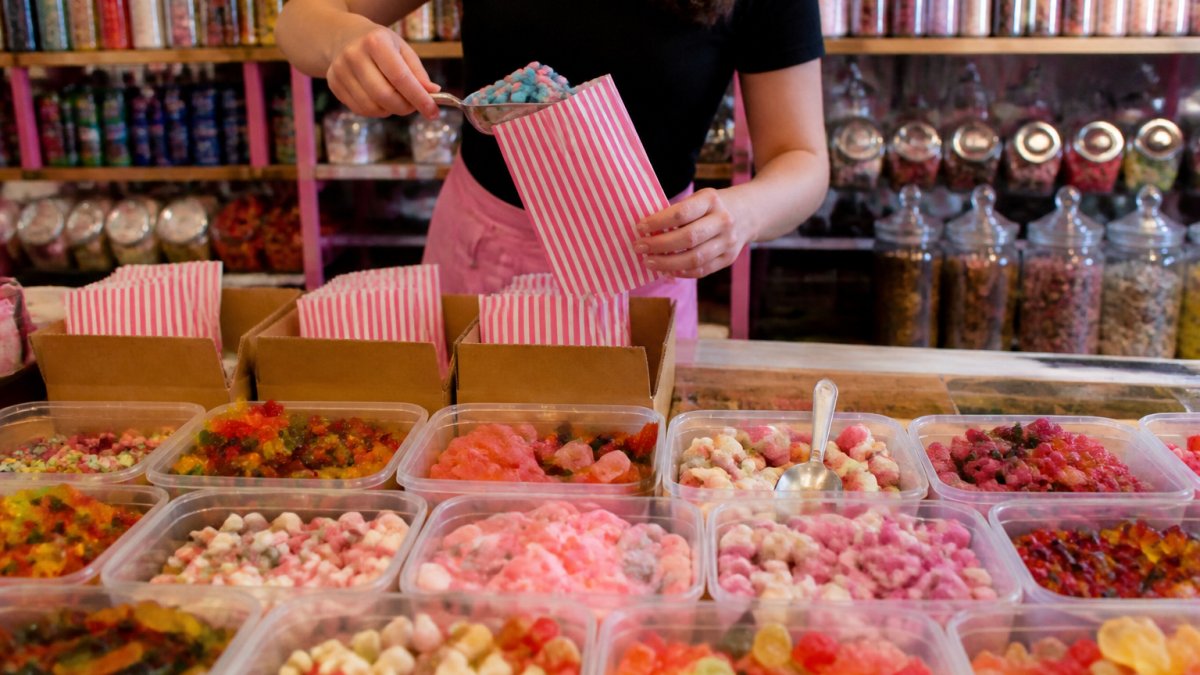
Watch Out A 'retro' or 'vintage' label on a bundle is a marketing term, not a guarantee. Some bundles mix genuinely discontinued-style sweets with current stock in old-fashioned packaging. Read the ingredient list and the pack date before you buy. Most 'discontinued' sweets fall into one of two camps: reformulated (still made, different taste) or genuinely gone (recipe lost or uneconomic). Knowing which camp your favourite is in saves you money and disappointment. Classic Pick and Mix Sweets Worth Filling a Bag With Close-up of a traditional sweet shop counter with rows of glass jars filled with colourful pick and mix sweets, a metal scoop resting in one jar and paper bags stacked nearby Classic pick and mix sweets are the loose sweets sold by weight and scooped into a bag yourself. The format has barely changed in decades, and that's the appeal: you choose exactly what goes in. A good bag balances texture. All boiled sweets gets boring. All chewy sweets gets sticky. Our rule of thumb for a mixed bag: Two hard or boiled sweets for length Two chewy sweets for variety One sherbet or fizzy sweet for contrast Liquorice, Aniseed and the Divisive Ones Liquorice splits a room. Liquorice allsorts, aniseed balls and black liquorice sticks are either the first thing in the bag or the thing left at the bottom. Aniseed is the gateway. It's the flavour behind aniseed balls and twists, and it's sweeter and gentler than full liquorice. If someone says they hate liquorice, hand them an aniseed twist first. Chocolate Treats and Raisins Chocolate raisins are the quiet hero of the pick and mix bag. Get Started Today → Rum slice, chocolate-covered nuts and classic chocolate limes round out the chocolate side. In a family bag, consider doubling up on chocolate. Sweets by Decade: What Each Generation Remembers Sweets by decade is the fastest way to find the right gift: ask what decade someone was at school in and you've narrowed the bag to a handful of lines. 1950s and 1960s: aniseed balls, pear drops, liquorice sticks, bought loose by weight 1970s: cola cubes, sherbet fountains, fruit salads, penny sweets from the corner shop 1980s: wine gums, jelly babies, gobstoppers, the golden age of the pick and mix counter There's a regional layer too: seaside towns leaned on rock and fudge, northern shops on mint and aniseed, and everyone claims their local shop had the best sherbet. They're all right, in their own way. Match the decade to the person, not to your own favourites. A 1970s school bag and a 1990s one have almost nothing in common.
Retro Sweet Boxes and Where to Find Them Now
Retro sweet boxes are pre-packed selections built around a theme, a decade or a memory. They're the easiest way to buy nostalgia as a gift and solve the 'how much do I order' problem in one go. But the market has split into three very different tiers, and knowing which one you're buying from changes what you get.
The Three Routes, and What Each Actually Delivers
1. The surviving traditional sweet shop. Independent shops that still sell loose from jars are the gold standard for freshness and range: buy by weight, usually in 100g increments, and ask for a mix.
2. The supermarket retro aisle. Supermarkets stock a narrow range of pre-packed retro lines, typically sherbet lemons, cola cubes, wine gums and a couple of chocolate items, in 150g to 200g bags.
3. Online specialists. This is where the full range lives, including the old-fashioned lines the big shops dropped.
What a Good Retro Box Should Contain
A well-built box balances texture and flavour like a good pick and mix bag. As a rule of thumb, a 1kg box should contain:
Two or three boiled sweets for length (pear drops, rhubarb and custard, aniseed twists)
Two chewy sweets for variety (wine gums, jelly babies, fruit jellies)
One sherbet or fizzy item for contrast (sherbet lemons, cola cubes)
Modern Equivalents for Discontinued Favourites
If the exact sweet you remember is gone, the closest match is usually a different line from the same family rather than a like-for-like replacement:
For a hard-centred aniseed ball: try an aniseed twist or a traditional aniseed ball from a specialist seller who specifies a hard centre.
For old-style bold-coloured boiled sweets: look for lines that still use the traditional colourings, or accept that the paler version is the current recipe.
For a sherbet fountain with a liquorice straw: check the product description carefully; some sellers still stock the version with the liquorice tube.
What to Check Before You Order
Pack date and shelf life. Old-fashioned sweets still have a shelf life, and a badly stored bag tastes of the warehouse, not the memory. Boiled sweets keep for 9 to 12 months; chewy sweets and chocolate are shorter.
Packing method. Sealed bags by sweet type, not one loose bag for everything.
Allergen information. Gelatine, milk, soya, nuts, gluten and sulphites all appear in retro boxes, and the box should list them clearly.
Never assume a 'retro' bundle is fresh stock. Check the pack date, the shelf life and the allergen list before you buy, especially if the box is a gift for a child or someone with a dietary restriction.
Ingredients, Allergens and Choosing Sweets for Children
Ingredients and allergens matter more than most nostalgia guides admit.
Under Food Standards Agency guidance on food additives and colours, certain colourings carry a warning label because of their effect on activity and attention in children.
The main allergens to watch in a pick and mix bag:
Gelatine in jelly sweets, which rules out most vegetarian diets
Milk and soya in chocolate items
Nuts and gluten in some chocolate and liquorice lines
For very young children, boiled sweets and gobstoppers are a choking risk (the NHS). Stick to soft jellies and chocolate for under-fives, and always check the age guidance on the pack.
Conclusion
The sweets you remember are still out there, but the bag you build matters as much as the shop you buy from. Get the decade right, balance the textures, and check the allergens before you hand anything to a child.
At Sweet junkies, we run a large traditional pick and mix shop with retro and modern sweets side by side.
Frequently Asked Questions
What are some discontinued sweets in the UK?
Several favourites have vanished from shelves over the years, including Spangles, Pacers, Texan bars and the original Opal Fruits before the Starburst rebrand. Many traditional sweets from childhood disappeared when smaller confectionery makers closed or recipes changed. Some survive as limited runs or specialist imports, but the exact flavour and texture are often different. If you are chasing a specific discontinued sweet, check specialist retro sweet shops, as ranges change and stock depends on what manufacturers still produce.
Which retro sweets are still available to buy?
Most of the classics are still made: sherbet lemons, humbugs, pear drops, aniseed balls, cola cubes, jelly babies, wine gums and liquorice allsorts. Retro sweets remain widely sold, both loose by weight and in pre-packed bags. Availability varies by maker, and some traditional sweets now come in slightly altered recipes to meet current food labelling rules. Specialist pick and mix shops tend to carry the widest range, including old-fashioned boiled sweets that supermarkets no longer stock.
What are the most popular traditional pick and mix sweets?
The staples that keep reappearing in classic pick and mix sweets are sherbet lemons, cola cubes, pear drops, jelly babies, wine gums, fruit jellies and liquorice allsorts. A good pick and mix selection covers a variety of tastes, so everyone finds something familiar.
What sweets are good for children?
Small, easy-to-handle sweets work best: jelly babies, fruit jellies, foam shapes and chocolate raisins. Avoid hard boiled sweets and gobstoppers for very young children because of choking risk, and check labels for allergens such as milk, soya and wheat. Traditional sweets are often sugary, so portion them rather than leaving a whole bag open. If you are building a party bag, mix softer sweets with a couple of wrapped favourites so parents can see exactly what is inside.
Comments